Natural Stone Retaining Wall Built to Hold and Drain Right
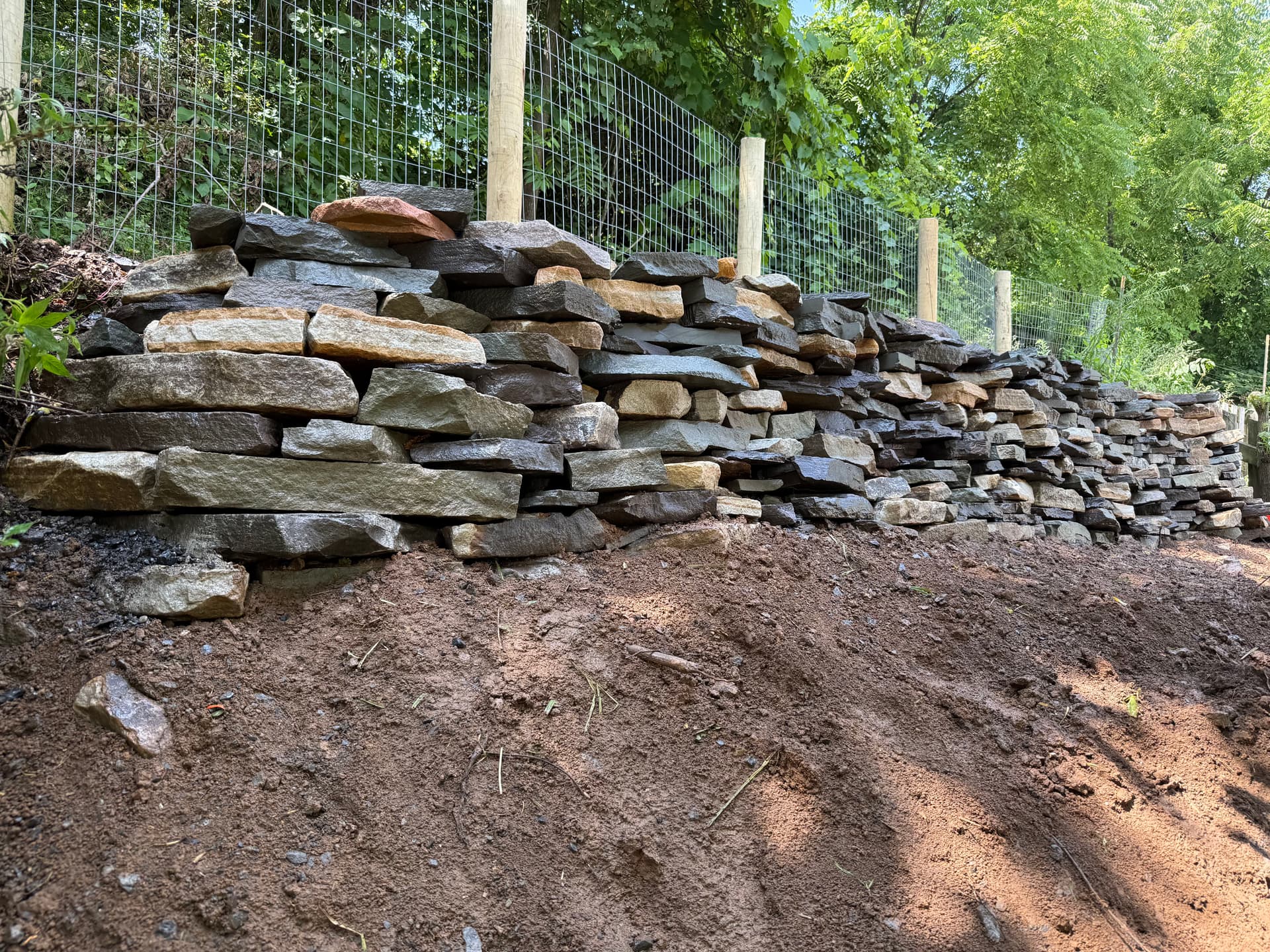
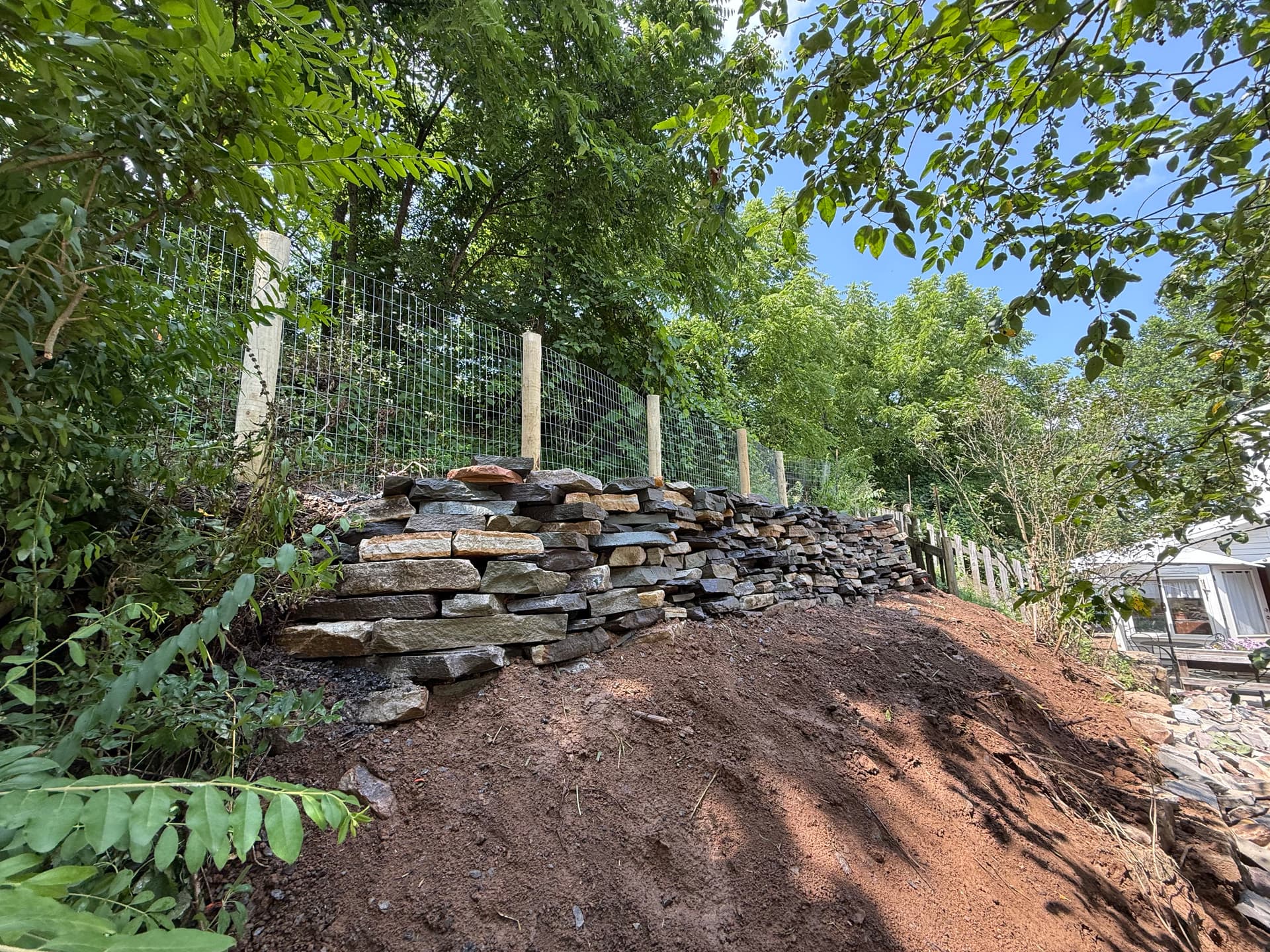
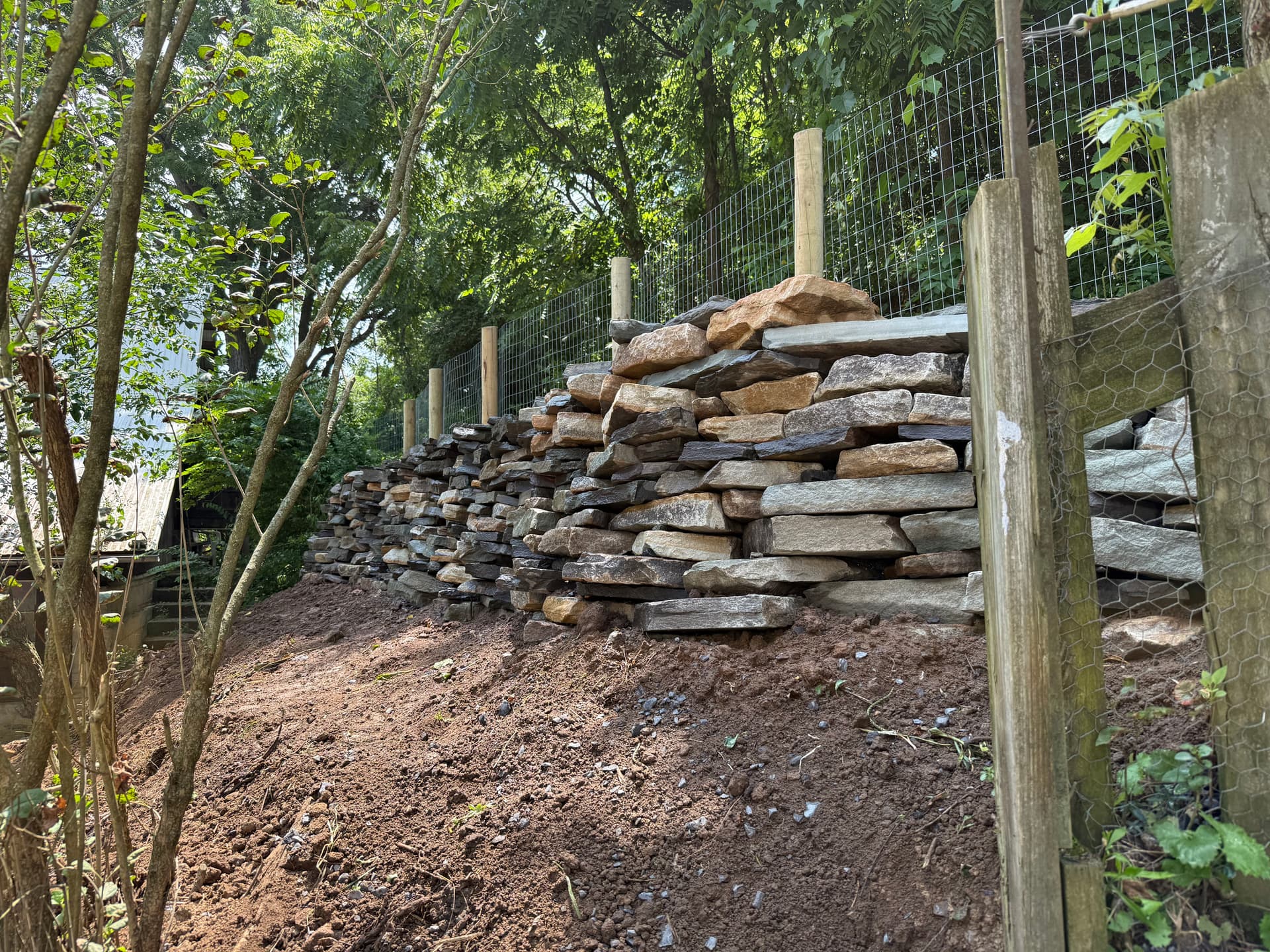
A sloped yard with nothing holding it back is more than just an eyesore - it's a property problem waiting to get worse. Erosion, water runoff, and shifting soil can cause real damage over time. A properly built retaining wall stops all of that in its tracks, and when it's built with natural stone, you get something that actually looks like it belongs there.
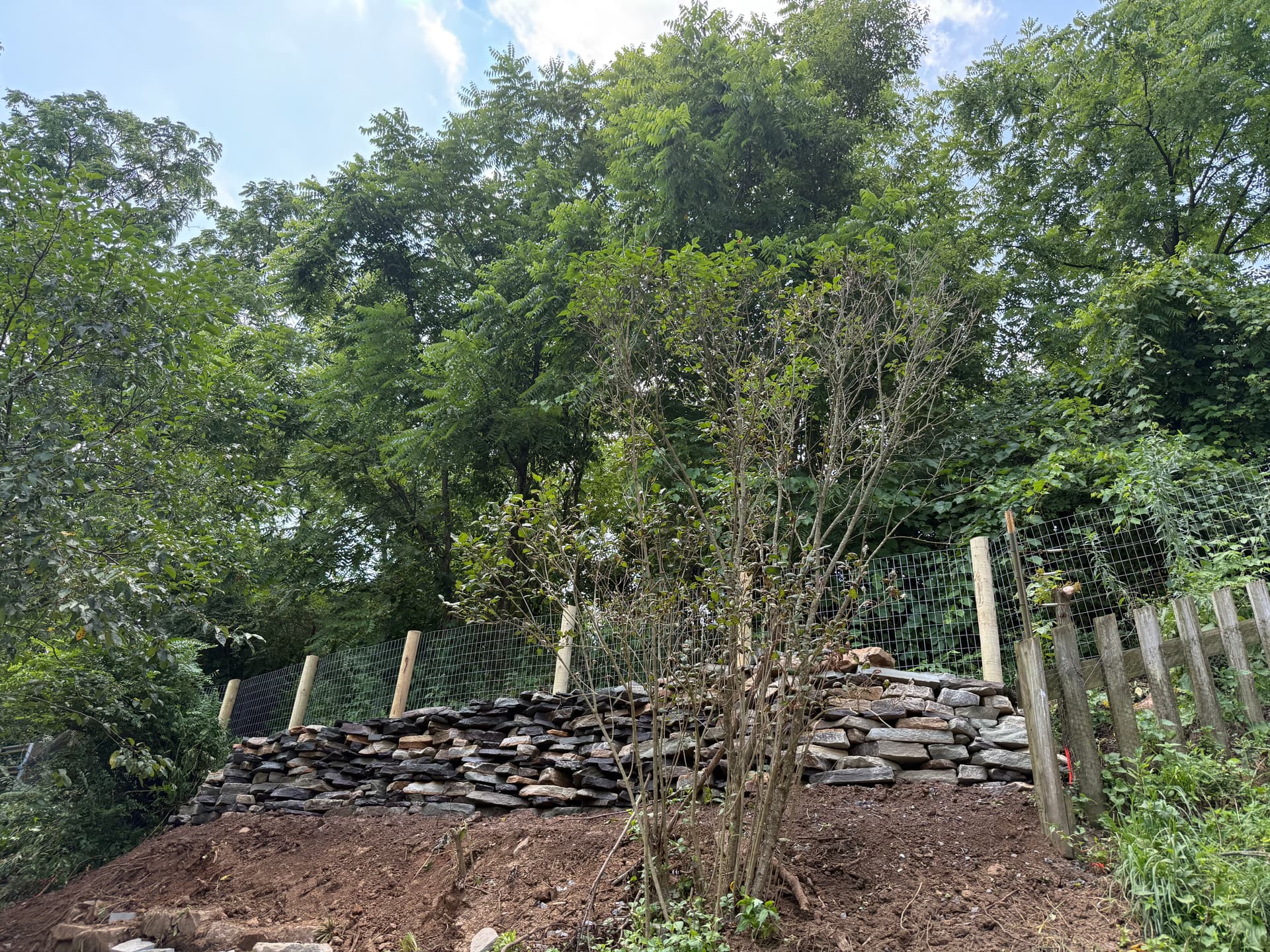
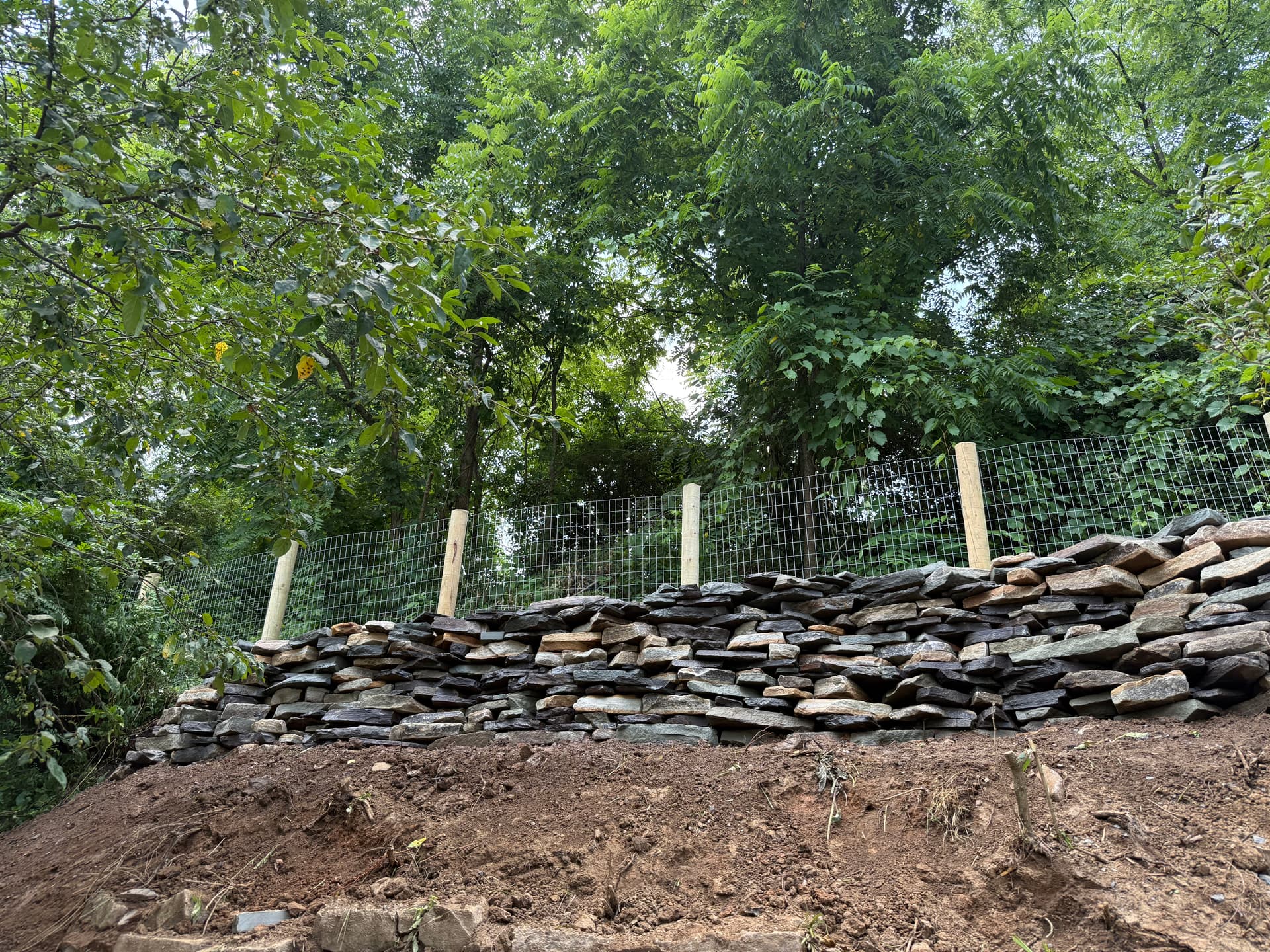
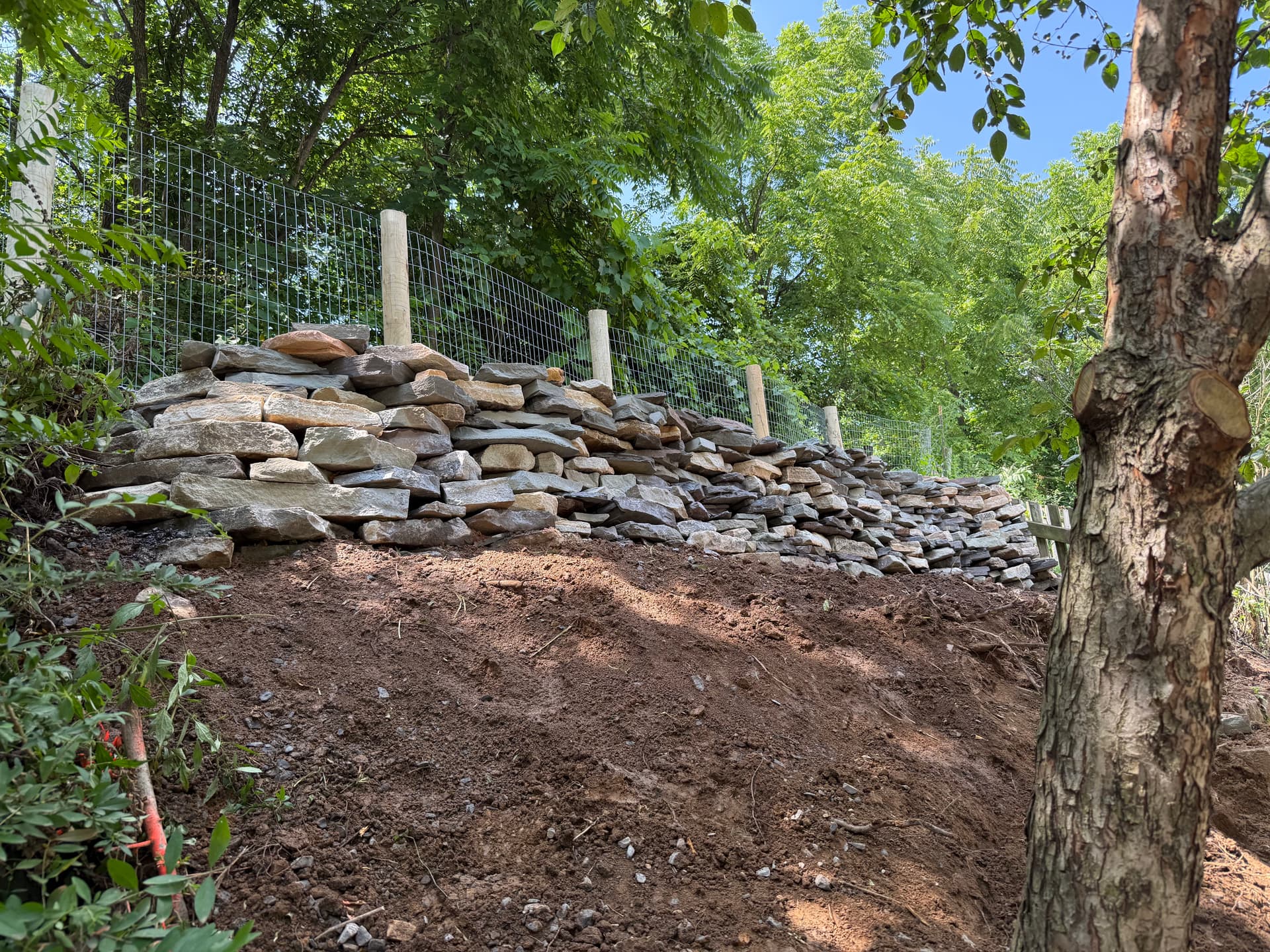
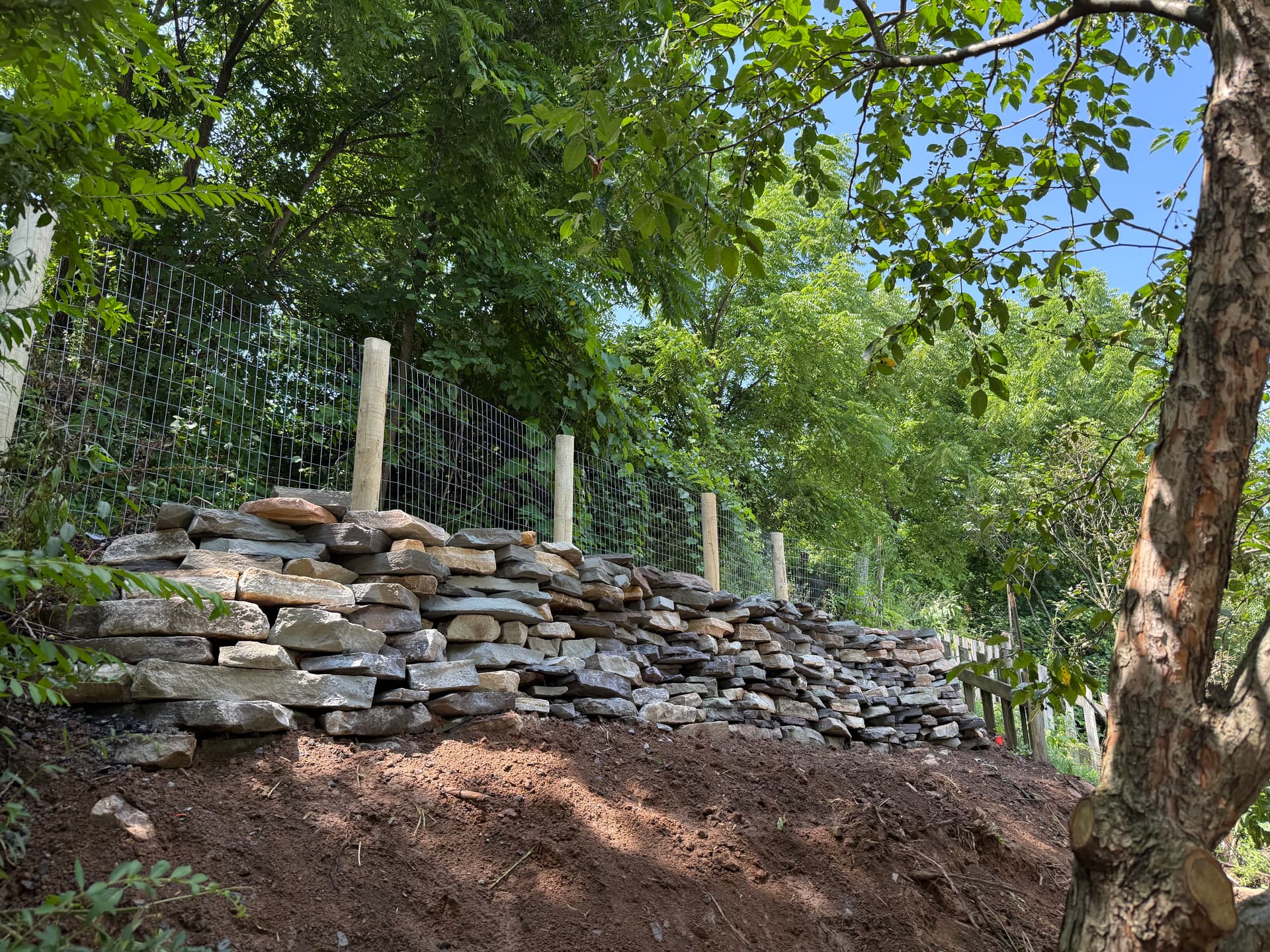
Here's what we were working with on this one - a significant slope that needed to be tamed and stabilized along a fence line running through a wooded area. The challenge with terrain like this isn't just stacking stone. It's making sure the wall is built from the ground up with the right foundation, proper drainage, and enough mass to hold the hillside back for years to come.
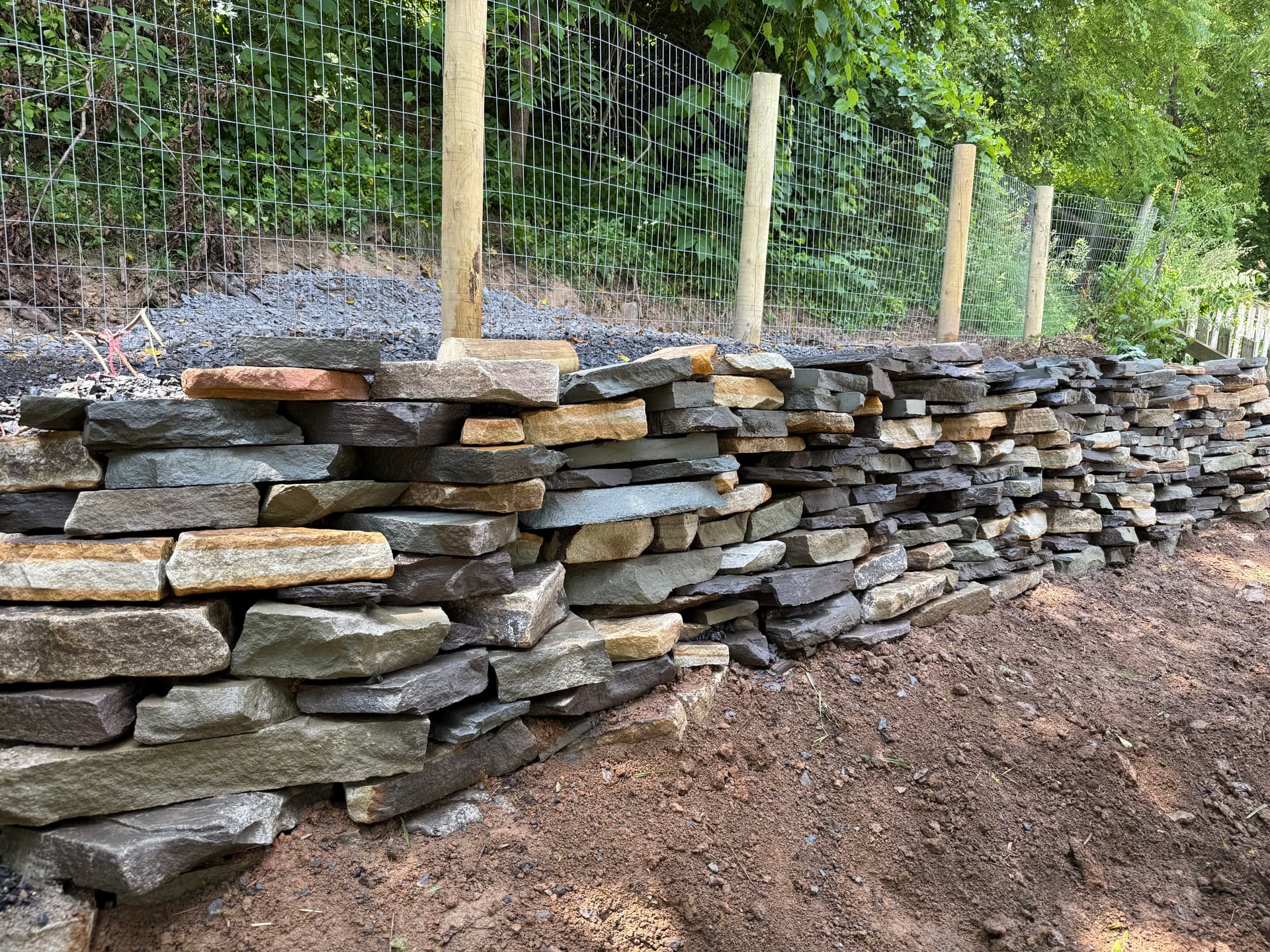
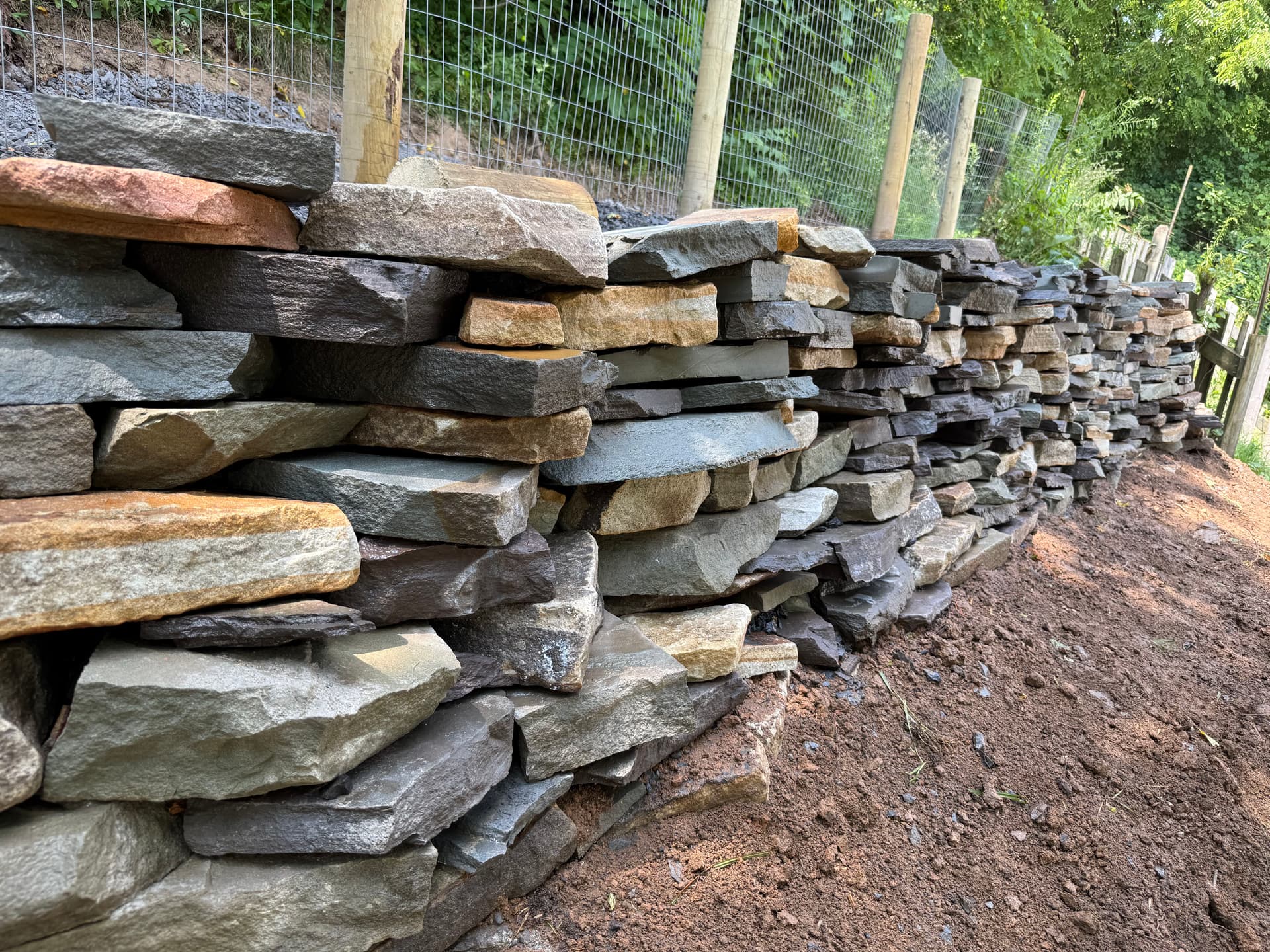
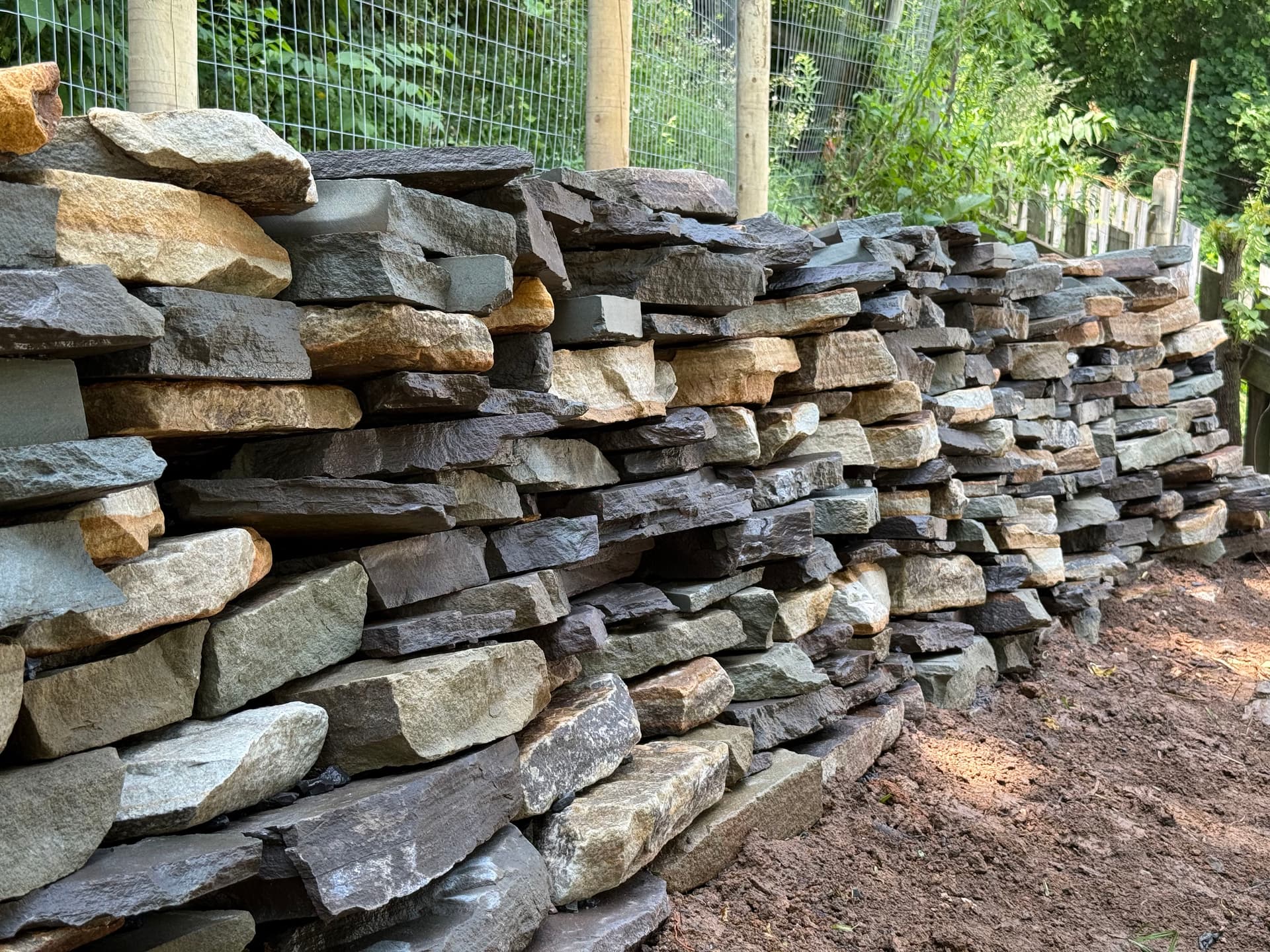
We used natural flat-cut stone throughout, hand-selecting and fitting each piece to create tight, stable courses from base to cap. That mix of darker bluestone-toned slabs and warm tan pieces isn't just good-looking - it's intentional. Varied stone sizes are worked in to lock each course together, which is what gives a dry-stack wall its real strength. No mortar holding this together. Just good technique and the right material.
What most people don't think about with retaining walls is the drainage side. You can see the gravel bed worked into the uphill side behind the wall. That's not an afterthought - it's a critical part of the build. Without proper drainage, water pressure builds behind the wall and breaks it down from the inside out. We build it right so the wall manages water the way it's supposed to.
The finished wall fits the landscape naturally. It follows the grade, works with the existing fence line, and looks like it's always been there. That's the thing about natural stone - it ages well and blends in rather than standing out awkwardly. Whether you've got a problem slope, active erosion, or just want to add some structure to a grade change, this is the kind of work that pays off long-term.