Landscape Bed Prep Done Right - Grading and Clean Edges
Most landscape beds don't fail because of bad plants or cheap mulch. They fail because nobody took the time to get the ground right before anything went in. Overgrown edges, uneven soil, poor drainage near the foundation - it adds up fast, and by the time it's obvious, you're dealing with a bigger mess than you started with.
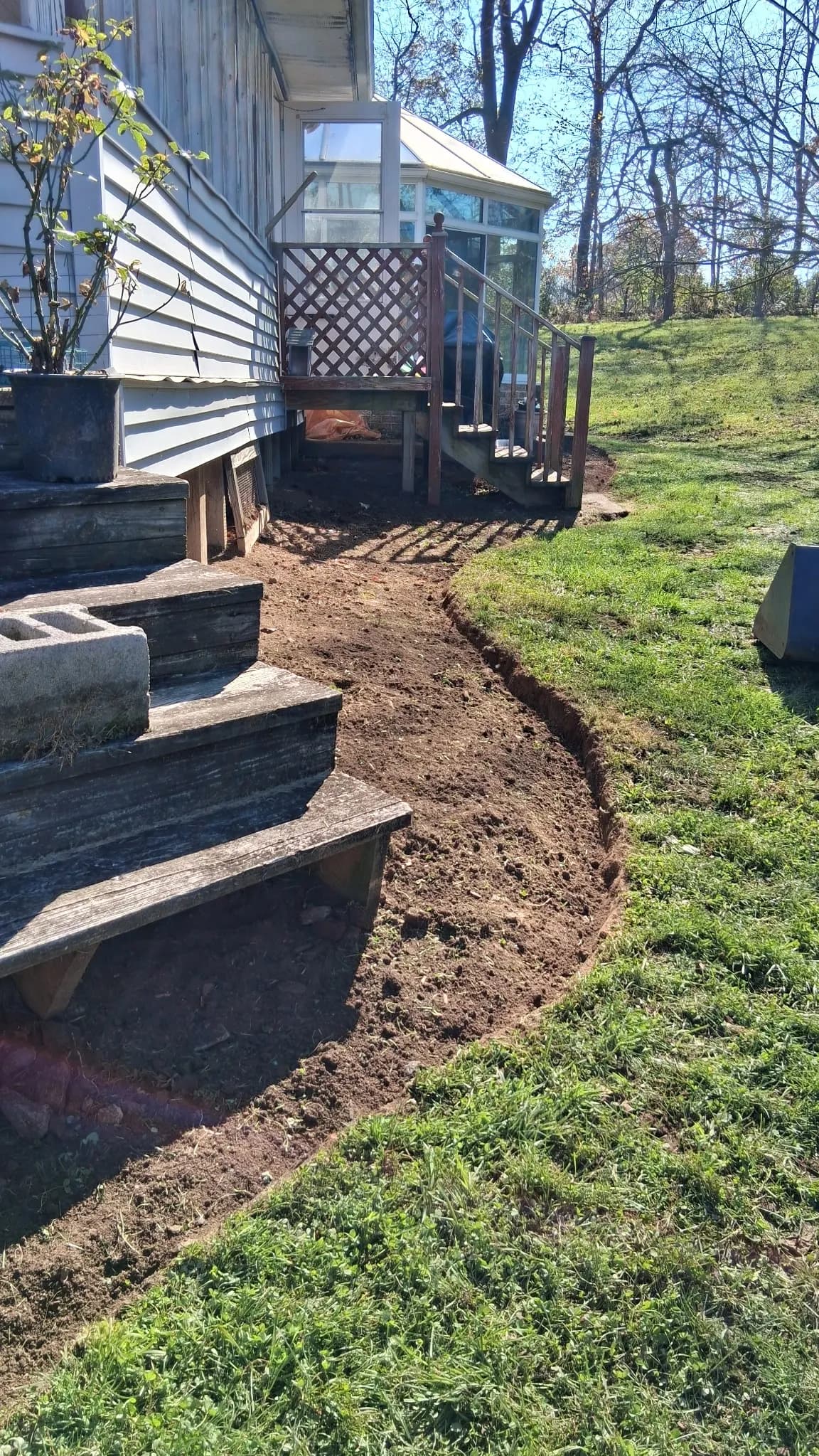
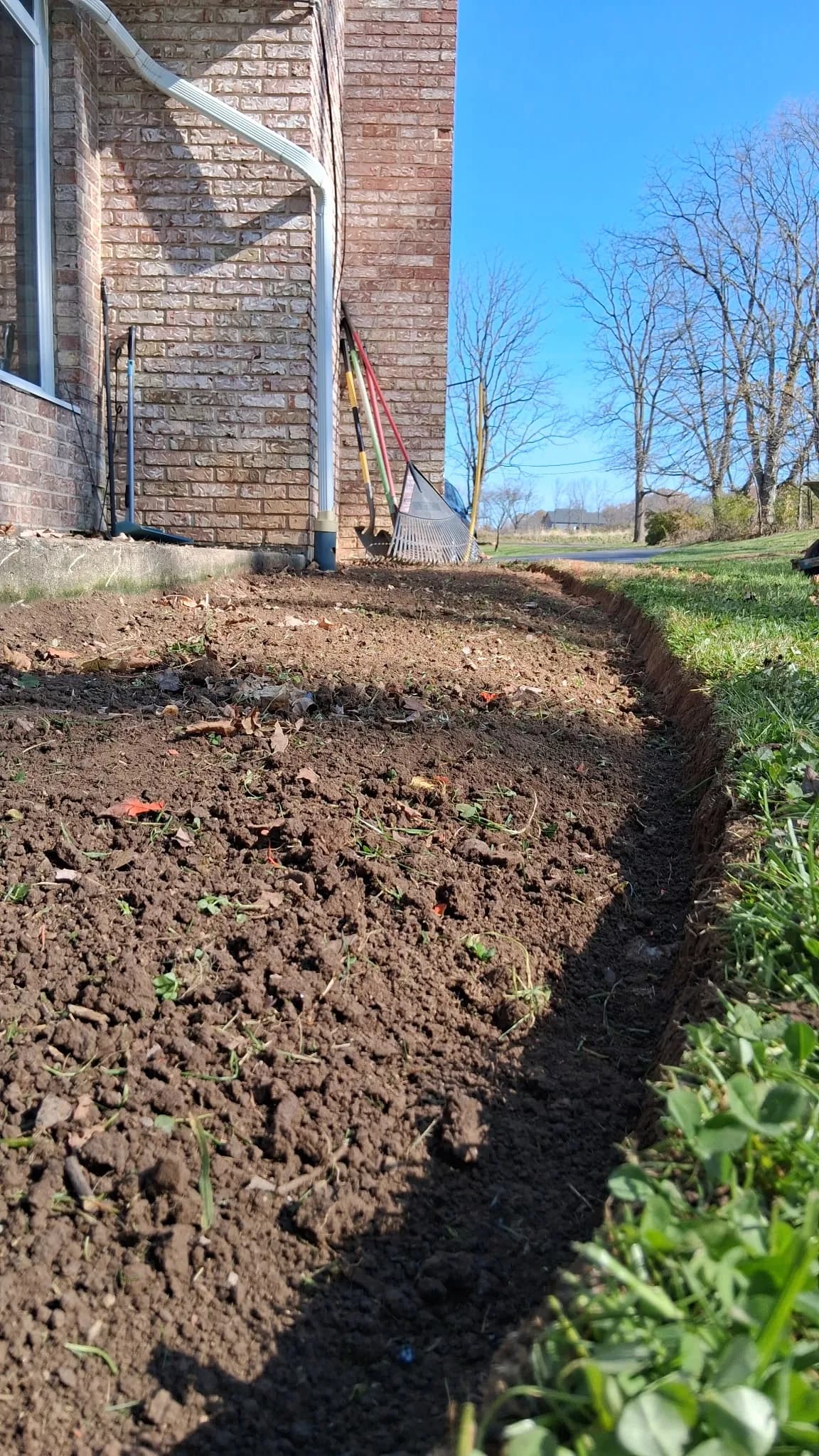
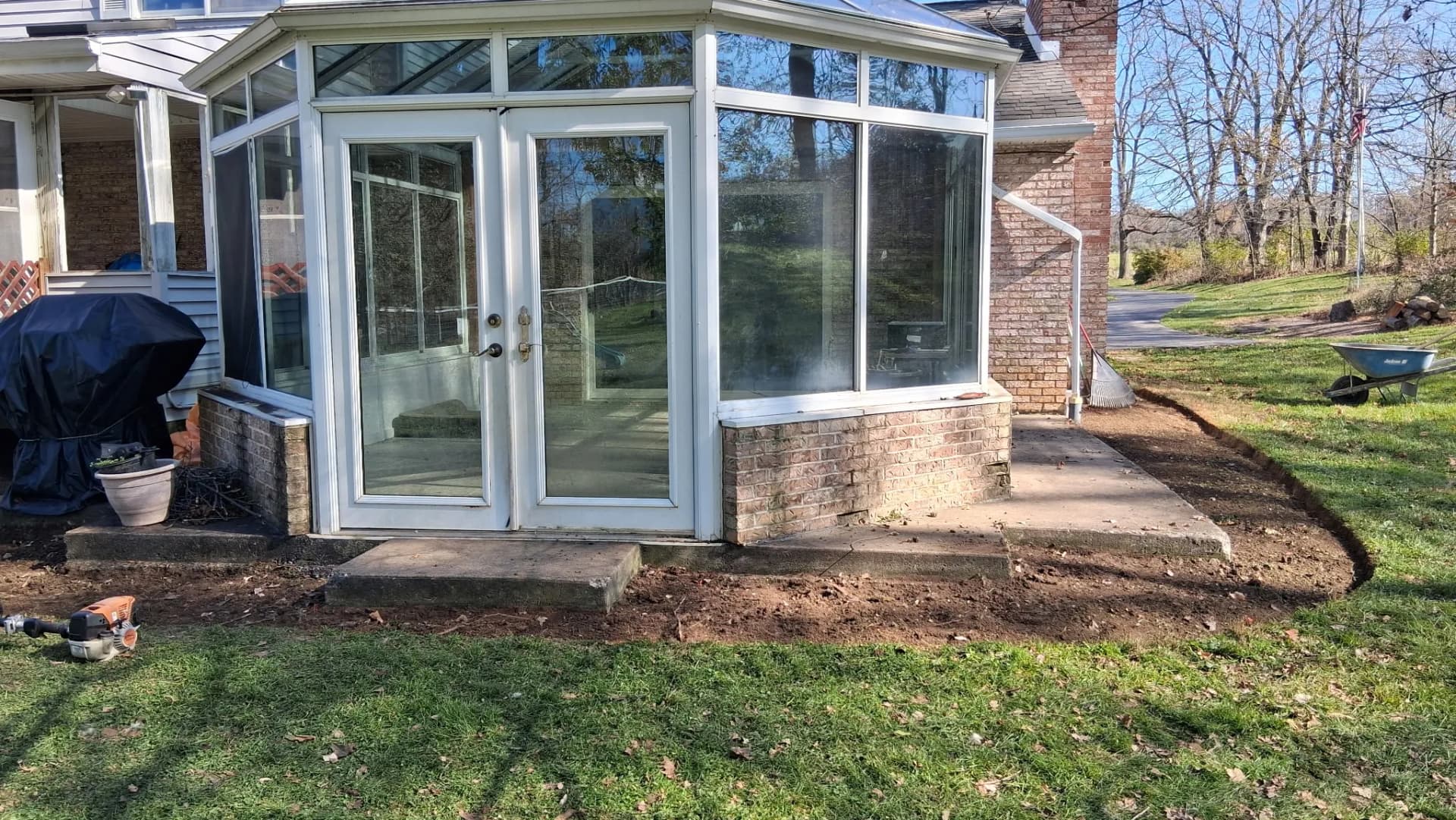
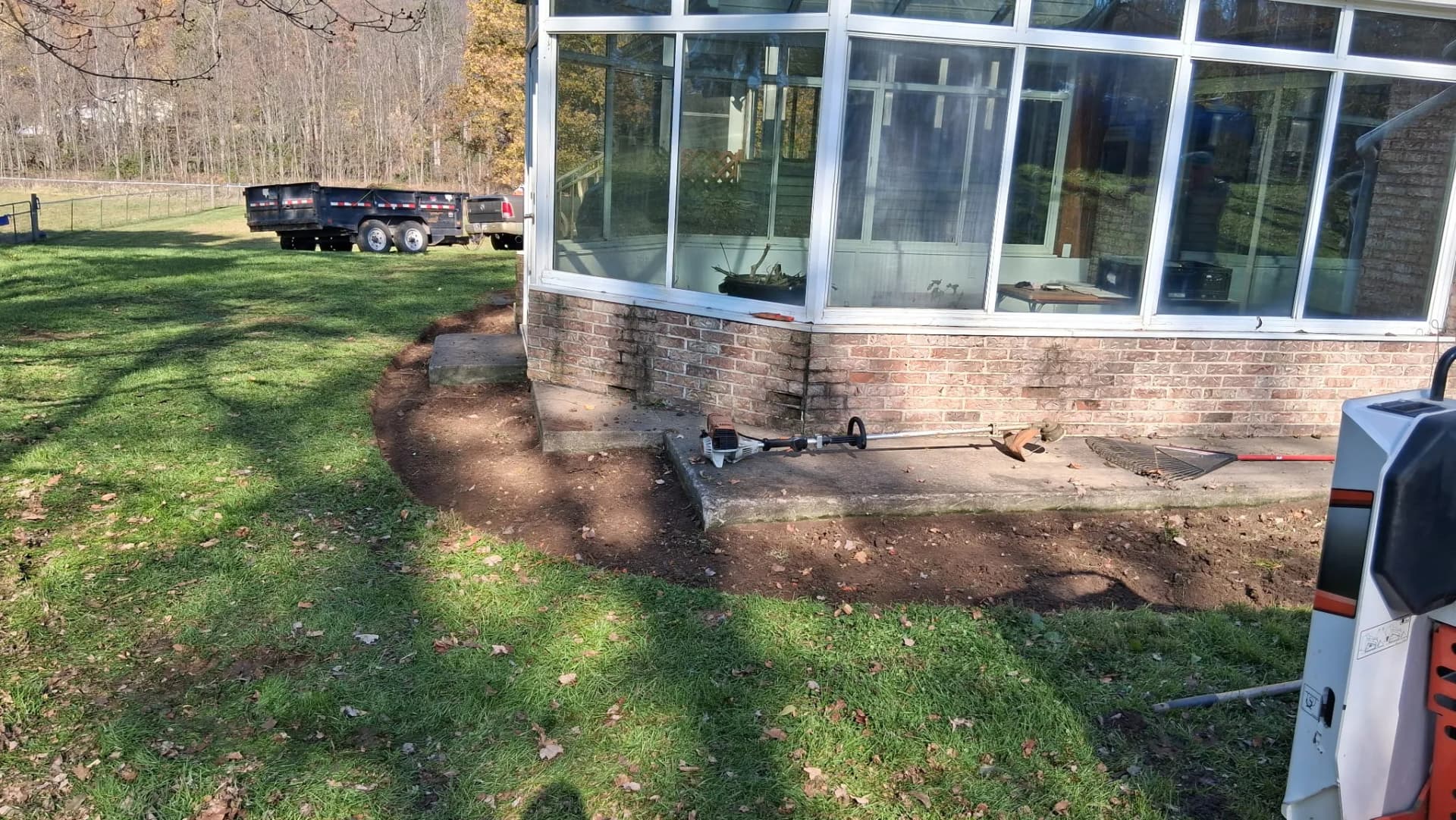
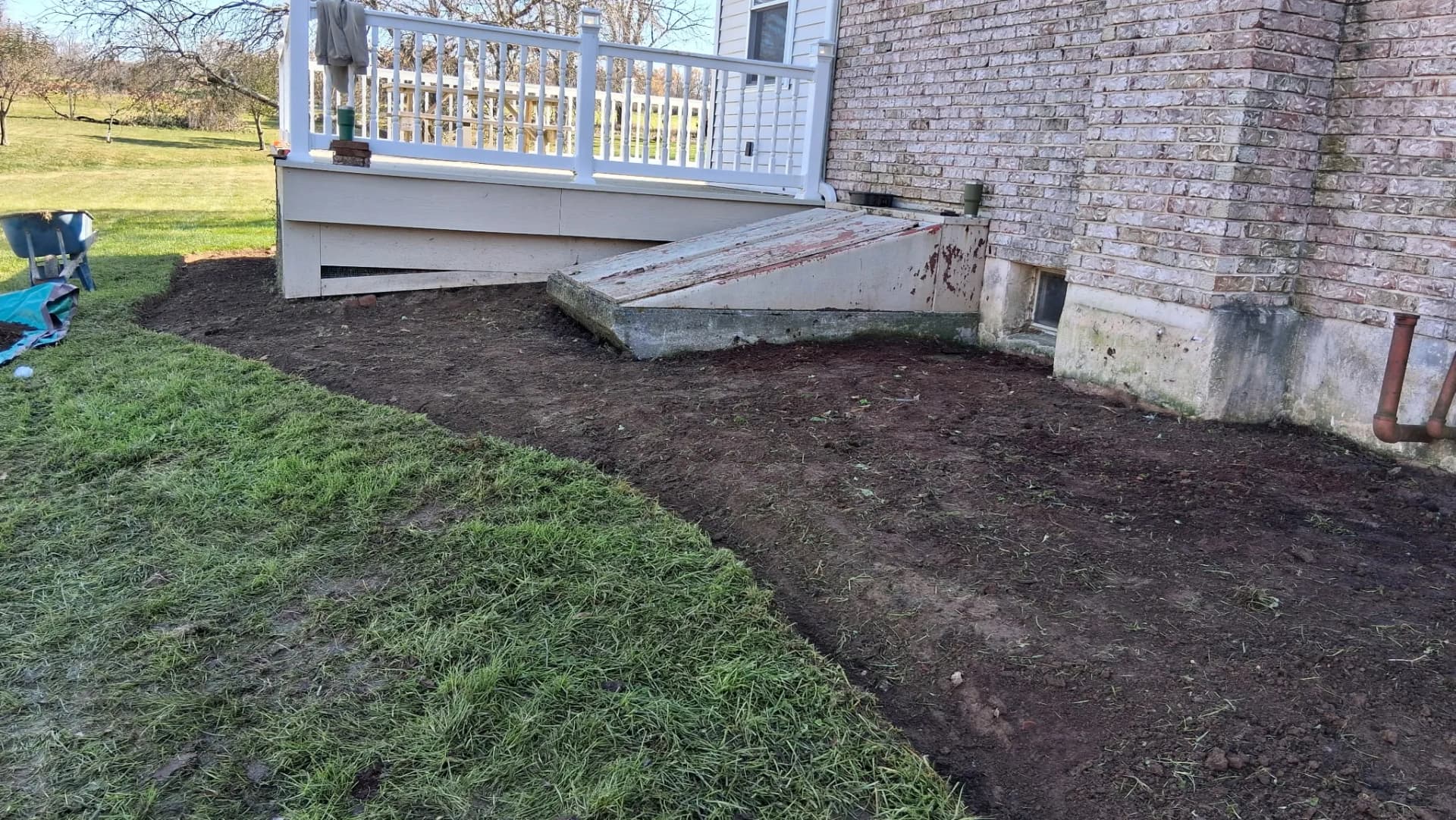
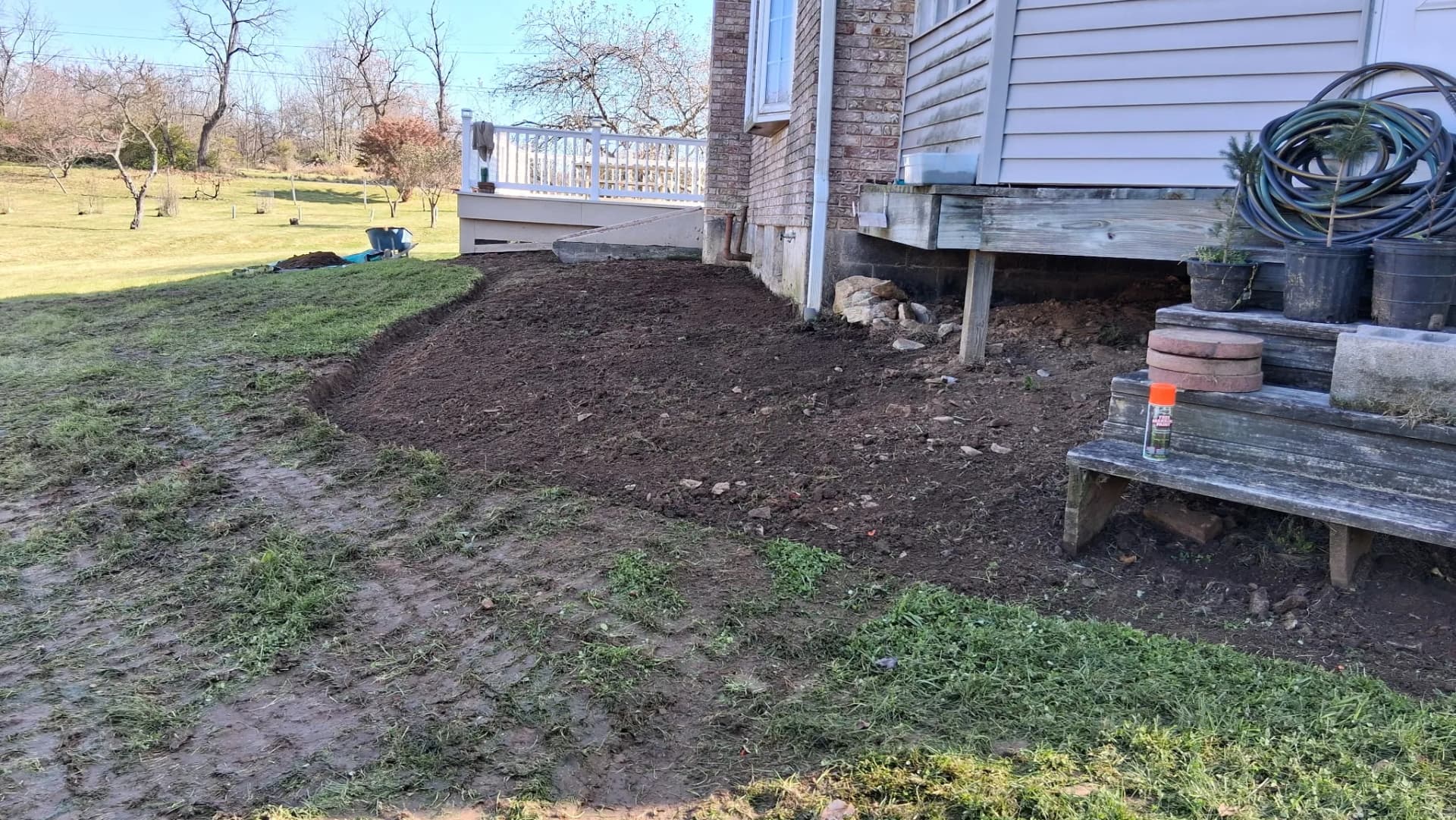
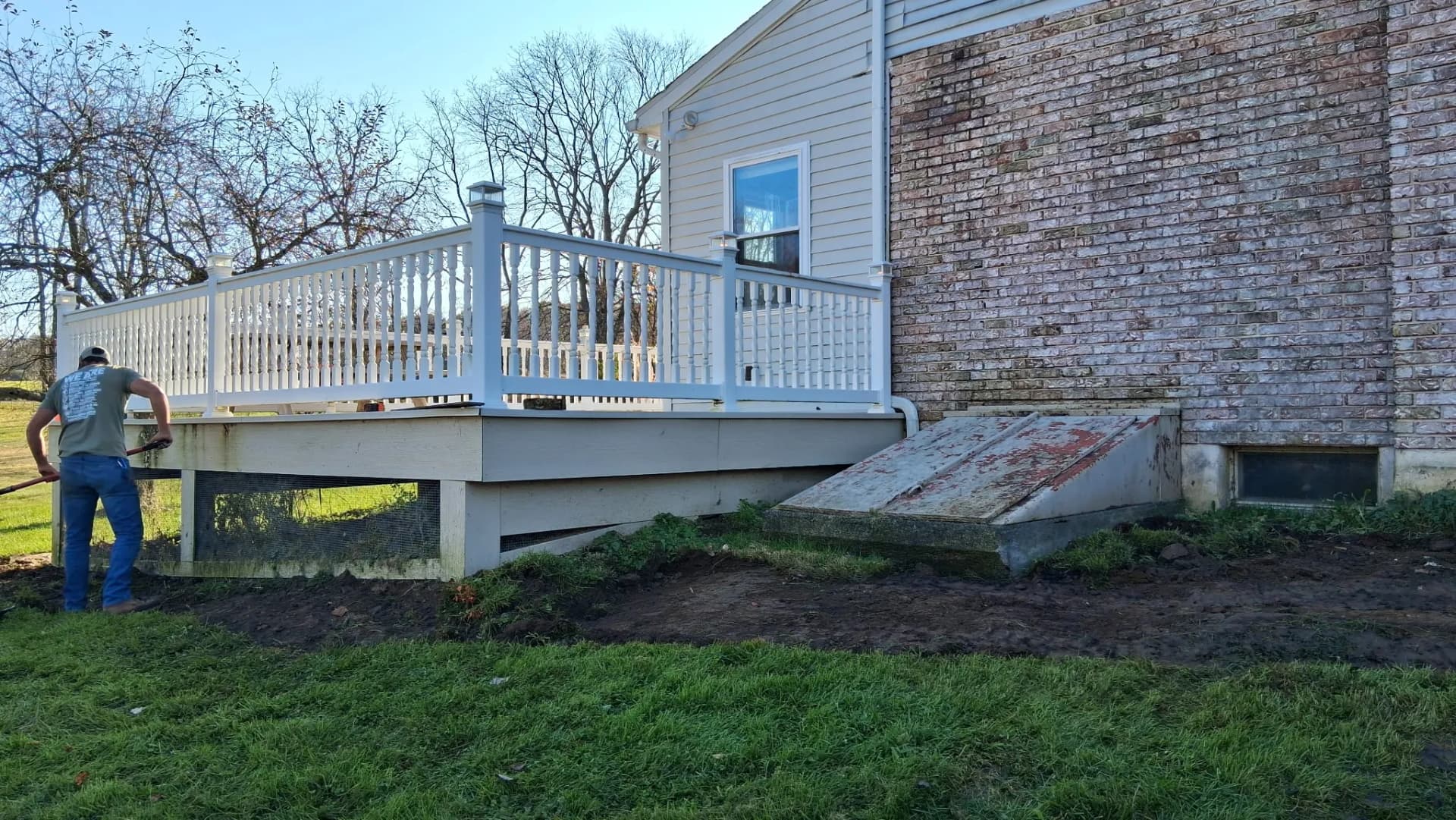
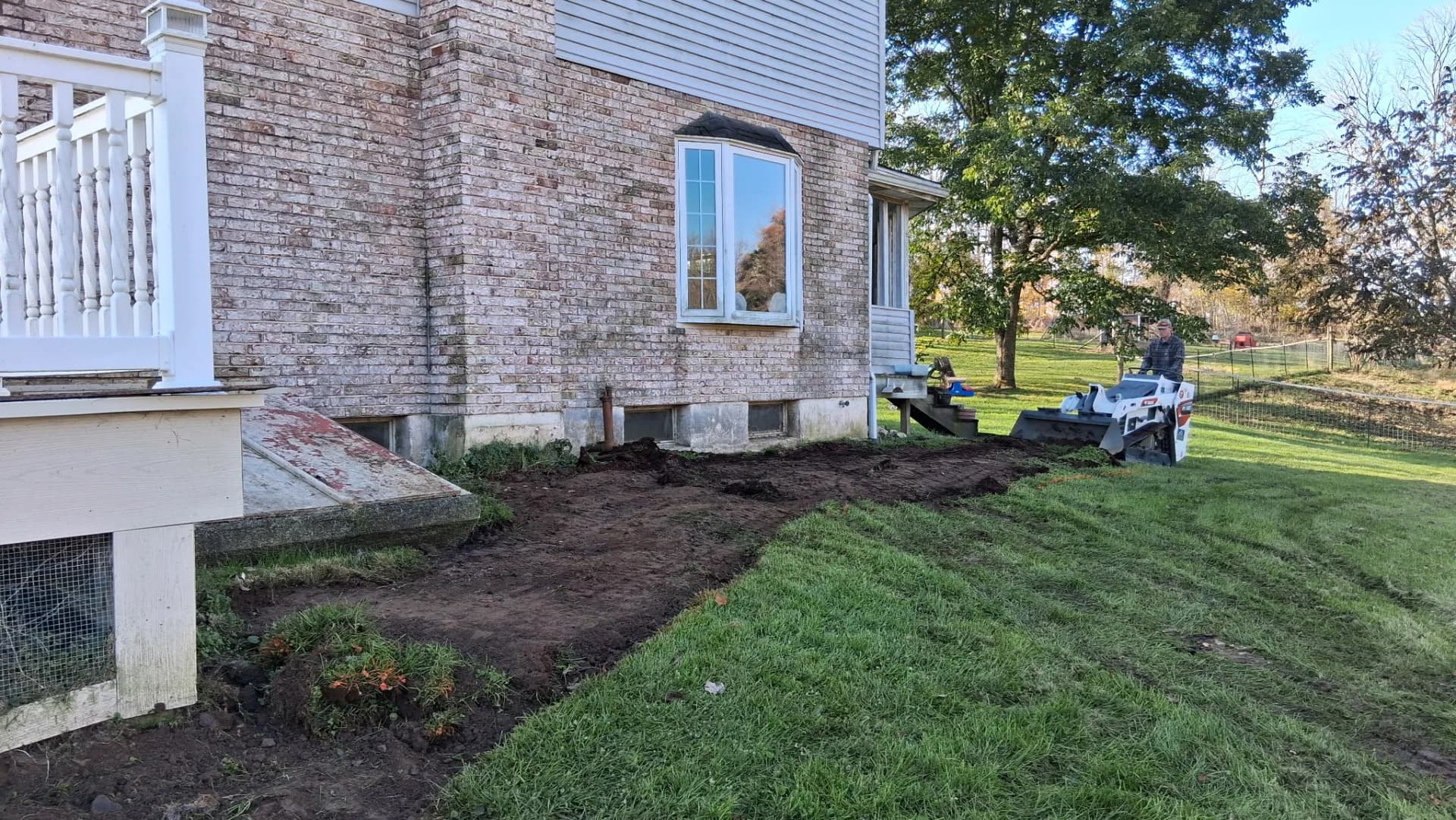
Here's what we were working with on this job - existing beds that had lost their shape, soil that needed to be pulled back and regraded, and areas along the foundation that weren't set up to drain properly. That's the kind of thing you can't fix by just throwing fresh mulch on top. It needs to be dug out and done right from the ground up.
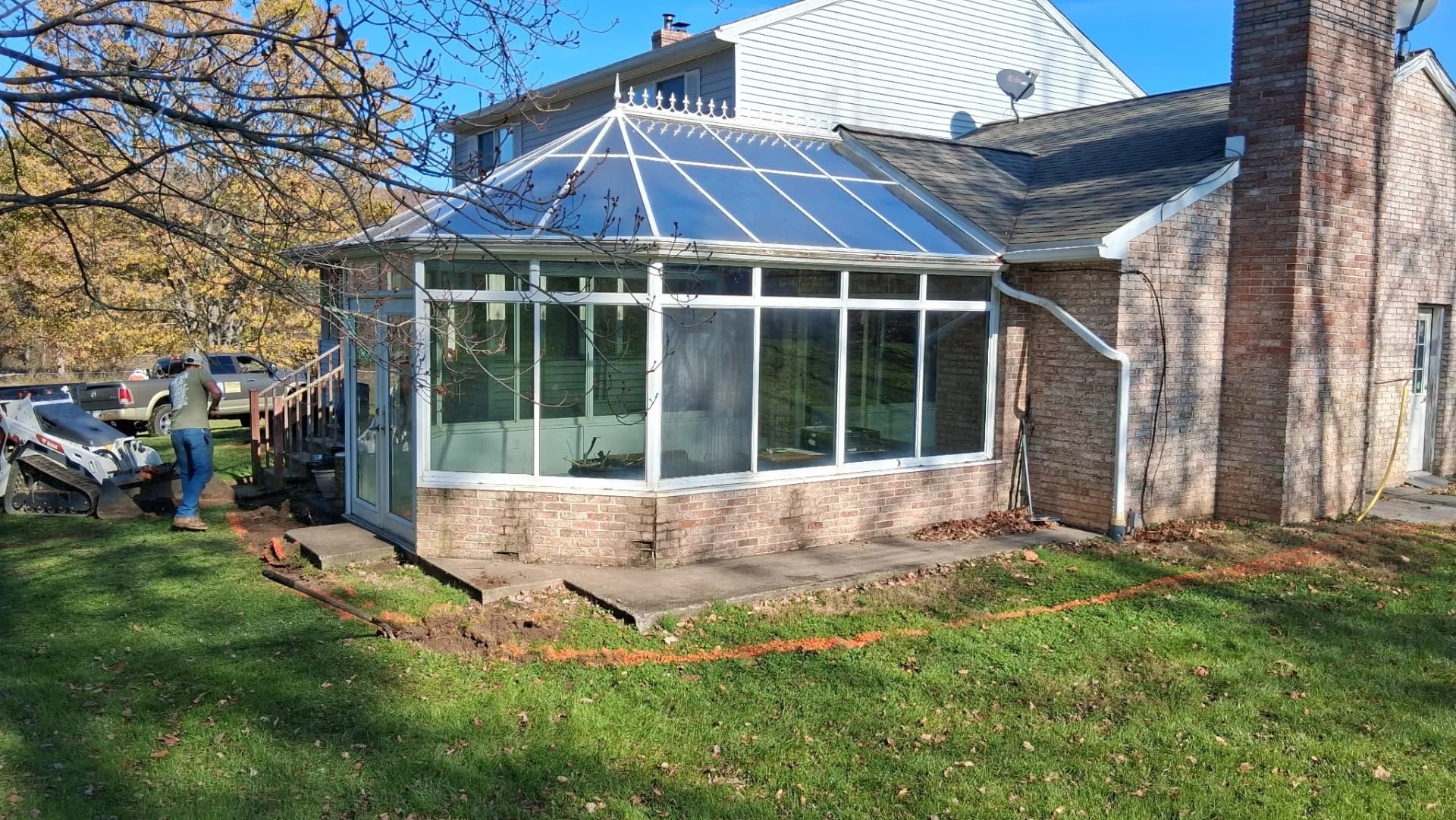
We stripped the beds down to bare soil, cut clean edges to separate the bed from the lawn, and regraded the area to make sure water moves away from the structure the way it should. A Bobcat made it possible to move material efficiently across the larger sections, while hand tools handled the detail work closer to the foundation and concrete. Both matter.
Once the grading and drainage were sorted, the beds were ready for the next phase - mountain stone and fresh mulch. That combination looks sharp and holds up well over time. But none of it lasts without solid prep underneath. That's the part most people never see, and it's exactly why we spend time on it.
Good prep isn't glamorous. It's just the difference between a bed that looks clean for a season and one that holds up for years without constant maintenance. If your landscape beds have gotten away from you, this is the kind of reset that actually solves the problem.