Hydroseeding Vs. Traditional Seeding
Compare hydroseeding and traditional seeding for fall lawn perfection in Central PA. Learn pros, cons, and decide your best fit.
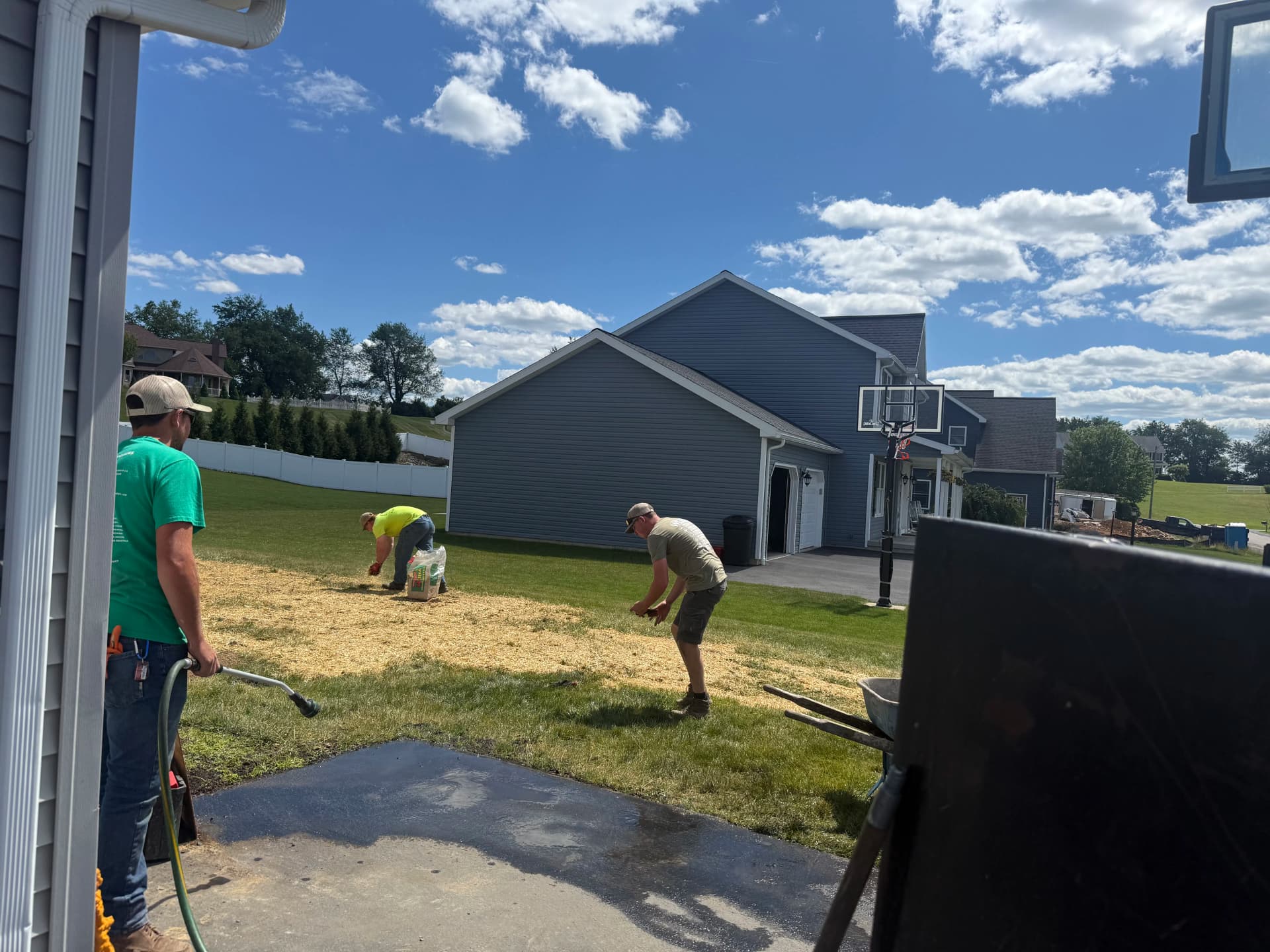
Hydroseeding vs. Regular Seeding in Fall: Which Is Better for Your Lawn?
Fall is one of the best times to establish a new lawn in Central Pennsylvania. Cooler temperatures, typically better soil moisture, and reduced summer heat stress create favorable conditions for many of the cool-season grasses commonly used throughout the region.
If you're starting a new lawn or repairing a large area, you'll generally have two common options: hydroseeding or traditional seeding.
Both methods can produce an excellent lawn. The biggest differences are how the seed is applied, how well it stays in place, the amount of initial protection it receives, and the cost of installation.
What Is Hydroseeding?
Hydroseeding applies a mixture of grass seed, water, mulch, and typically fertilizer or other specified additives using specialized spraying equipment.
The mixture is sprayed evenly across prepared soil, creating a visible layer of mulch over the seeded area.
One of hydroseeding's biggest advantages is the mulch. It helps hold moisture around the seed while providing some protection against drying and minor erosion.
Hydroseeding is particularly useful for:
New home construction
Large lawn installations
Commercial properties
Roadside and disturbed areas
Slopes and difficult-to-reach areas
Large bare areas requiring uniform coverage
Because the seed, mulch, and other materials are applied together, hydroseeding can also be an efficient way to cover a large property.
What Is Regular Seeding?
Traditional or "regular" seeding involves preparing the soil and spreading dry grass seed with a broadcast, drop, slit, or similar seeding method.
Depending on the project, the seed may then be lightly incorporated into the soil and covered with straw or another suitable material.
Traditional seeding doesn't require hydroseeding equipment, making it practical for smaller lawns, repairs, renovations, and areas where equipment access is limited.
When the soil is prepared correctly and the seed receives adequate moisture, conventional seeding can produce excellent results.
Why Fall Is a Great Time to Seed in Central PA
Most lawns in Central Pennsylvania contain cool-season grasses such as turf-type tall fescue, Kentucky bluegrass, and perennial ryegrass.
These grasses perform well when temperatures are cooler. Establishing them in late summer into early fall can give young grass an opportunity to develop before winter while avoiding much of the intense heat associated with summer establishment.
Timing still matters.
Waiting too far into fall can leave slower-germinating grass without enough time to establish before cold weather arrives. That's particularly important when selecting seed mixtures containing grasses with different germination and establishment rates.
For that reason, don't wait until the lawn looks dormant and assume it's still an ideal time to start seeding.
Hydroseeding vs. Regular Seeding: Germination
Homeowners sometimes assume hydroseed contains a special type of grass that grows much faster than regular seed.
That's not necessarily the case.
The grass seed itself can be similar or even identical. The difference is primarily in the application method and the environment surrounding the seed.
Hydroseeding mulch can help retain moisture around the seed, which is extremely important during germination. Traditional seed can perform just as well when it has good soil contact, proper coverage, suitable temperatures, and consistent moisture.
Neither method eliminates the need for watering.
Which Method Provides Better Coverage?
Hydroseeding is especially effective when installing large areas because the slurry can be sprayed relatively uniformly across prepared soil.
Traditional broadcast seeding can also provide excellent coverage, but careful application is important. Applying seed in multiple directions can help reduce missed areas and produce more uniform distribution.
Regardless of the method, poor soil preparation will limit the final result.
Simply spreading seed over hard, compacted, rocky, or poorly graded soil isn't a recipe for a quality lawn.
What About Slopes?
Hydroseeding is often attractive for sloped areas because its mulch provides more protection than uncovered seed.
However, hydroseeding should not be confused with a complete erosion-control system.
Steep slopes, concentrated runoff, drainage channels, and erosion-prone areas may require additional measures such as erosion-control blankets, specialized mulch products, or other stabilization methods.
Water management should be addressed before seeding—not after the first major rainstorm.
Which Is More Affordable?
Traditional seeding is generally the simpler approach and can be economical, particularly for smaller areas.
Hydroseeding requires specialized equipment and combines several materials into one application. For large areas, however, its ability to efficiently apply seed and mulch can make it an attractive alternative to manually seeding and covering an entire property.
The actual price difference depends heavily on lawn size, seed mixture, site accessibility, soil preparation, grading, mulch requirements, and the amount of material required.
Soil Preparation Matters More Than the Application Method
Whether you choose hydroseeding or conventional seeding, proper soil preparation is one of the biggest factors affecting success.
A new lawn should have suitable soil, proper grading, good drainage, and a prepared surface that allows seed to establish good contact with the soil.
Construction sites deserve particular attention. Heavy equipment can leave soil severely compacted, and newly graded properties may contain rocks, debris, or poor-quality subsoil.
Spraying hydroseed over an improperly prepared site won't magically create good growing conditions.
The same applies to conventional seed.
Good lawns start with good preparation.
Watering Is Critical
A newly seeded lawn needs consistent moisture during germination.
The objective is generally to keep the seedbed moist without flooding the area or creating runoff. Depending on weather and soil conditions, this can mean lighter, more frequent watering during the initial germination period.
As the grass germinates and begins establishing roots, watering practices can gradually transition toward deeper and less frequent irrigation.
One of the biggest reasons new lawns fail isn't the seeding method—it's allowing the seedbed to repeatedly dry out during germination.
Fall weather can make maintaining moisture easier than during summer, but newly seeded lawns still need attention.
Don't Forget the First Mowing
Once the new grass becomes established enough to mow, don't wait until it is excessively tall.
Use a mower with sharp blades and avoid removing too much of the grass blade in a single mowing. The lawn may initially look somewhat thin or uneven, but regular mowing can encourage a more uniform appearance as the turf continues developing.
Avoid mowing when the new soil is saturated or soft enough for the mower to create ruts.
Hydroseeding vs. Regular Seeding: Which Should You Choose?
Neither method is automatically better for every property.
Hydroseeding can be an excellent option for large new lawns, difficult areas, and projects where applying seed and mulch together offers a significant advantage.
Traditional seeding can be a practical and effective choice for smaller lawns, renovations, repairs, and properties where conventional equipment can easily access the site.
For either method, the keys to success remain largely the same: proper timing, quality seed, good soil preparation, adequate seed-to-soil contact, consistent moisture, and proper maintenance after germination.
Start Your Central PA Lawn This Fall
For Central Pennsylvania homeowners, fall offers an excellent opportunity to establish or renovate a lawn without exposing young grass to the worst of the summer heat.
The decision between hydroseeding and regular seeding should come down to the property's size, slope, soil conditions, accessibility, budget, and the desired installation method.
Whichever method you choose, don't focus only on what happens on installation day. Proper preparation before seeding and consistent care afterward are what turn grass seed into a thick, established lawn.
Considering hydroseeding or traditional lawn seeding in Central PA this fall? A professional lawn installation contractor can evaluate your property, prepare the soil, recommend an appropriate seed mixture, and determine which seeding method makes the most sense for your site.