Commercial Snow Removal: Why?
Discover why a strategic snow removal plan is crucial for your commercial property. Ensure safety and accessibility during winter months.
Commercial Snow Removal in Central PA: Why Your Business Needs a Winter Plan
Winter weather in Central Pennsylvania can create serious challenges for commercial properties. Snow-covered parking lots, icy sidewalks, loading areas, and entrances don't just make a property look neglected—they can interfere with employees, customers, tenants, deliveries, and everyday business operations.
That's why commercial snow removal is about much more than pushing snow out of a parking lot.
A well-planned snow and ice management program starts before the first storm and continues throughout the winter. From pretreatment and plowing to sidewalk clearing and deicing, having a plan in place can help keep your property accessible when winter weather arrives.
Why Commercial Snow Removal Matters
For a homeowner, waiting a few hours to clear a driveway may be inconvenient. For a business, those same few hours can affect an entire day's operations.
Employees need to get to work. Customers need safe access to the building. Delivery trucks need room to maneuver. Tenants need usable parking spaces. Emergency and service vehicles may also need access to the property.
Professional commercial snow removal helps keep these critical areas open and manageable throughout a winter storm.
Commercial Snow Removal Starts Before the Snow Falls
One of the most important parts of snow management happens before winter even begins.
A professional contractor should evaluate the property and develop a plan for snow and ice events. This includes identifying priority areas, potential hazards, drainage locations, snow storage areas, and obstacles that may become difficult to see once they're covered by snow.
A preseason site plan may identify:
Parking lots and traffic lanes
Building entrances and exits
Sidewalks and pedestrian areas
Loading docks
Fire hydrants and emergency access areas
Dumpster and service areas
Drainage structures
Curbs and islands
Designated snow storage areas
Planning ahead allows crews to work more efficiently once a storm begins.
Snow Plowing for Commercial Parking Lots
Parking lots are usually one of the biggest priorities on a commercial property.
The objective isn't simply to push snow from one side of the lot to the other. Snow needs to be moved strategically so that it doesn't block parking spaces, intersections, entrances, sight lines, sidewalks, loading areas, or drainage.
Snow piles also need to be considered throughout the season.
A location that works for the first two-inch snowfall may become a problem after several larger storms. Good commercial snow planning considers where accumulated snow can be stored without interfering with the property's operation.
When necessary, larger snow piles may need to be relocated or hauled away.
Sidewalk and Entrance Clearing
A freshly plowed parking lot is only part of the job.
Customers and employees still need to get from their vehicles to the building.
Sidewalks, ramps, steps, and entrances often require separate equipment and crews. Depending on the property, this may involve snow blowers, shovels, smaller plows, and ice-control materials.
High-traffic pedestrian areas should receive particular attention because packed snow can quickly turn into a slippery surface.
Ice Management Is Just as Important as Snow Removal
Some of the most difficult winter conditions occur when there isn't much snow at all.
Freezing rain, refreezing meltwater, and rapidly changing temperatures can create icy surfaces throughout a property.
Commercial snow contractors may use salt or other appropriate ice-control materials to help manage these conditions. Depending on the storm and temperatures, materials can be applied before, during, or after a weather event.
The goal is to manage snow and ice effectively while using materials appropriately for the conditions and surfaces involved.
What Is Pretreatment?
Pretreatment involves applying an appropriate ice-control material before certain winter weather events.
Depending on the forecast, pavement conditions, temperatures, and material being used, pretreatment can help reduce the bond between frozen precipitation and the pavement surface.
That can make subsequent snow and ice management more effective.
Pretreatment isn't appropriate for every situation, however. Timing, pavement temperature, expected precipitation, and changing weather conditions all matter. A professional snow contractor should evaluate conditions rather than automatically treating every storm the same way.
Every Snowstorm Is Different
A four-inch powdery snowfall at cold temperatures can require a different strategy than two inches of heavy wet snow followed by freezing rain.
Timing matters too.
A storm arriving overnight may allow crews to clear an empty parking lot before businesses open. A storm beginning during the afternoon commute may require crews to work around vehicles, employees, customers, and ongoing snowfall.
Effective commercial snow management adapts to the actual event rather than relying on exactly the same approach every time.
Why Commercial Properties Benefit From Dedicated Equipment
Commercial snow removal can require considerably more equipment than residential plowing.
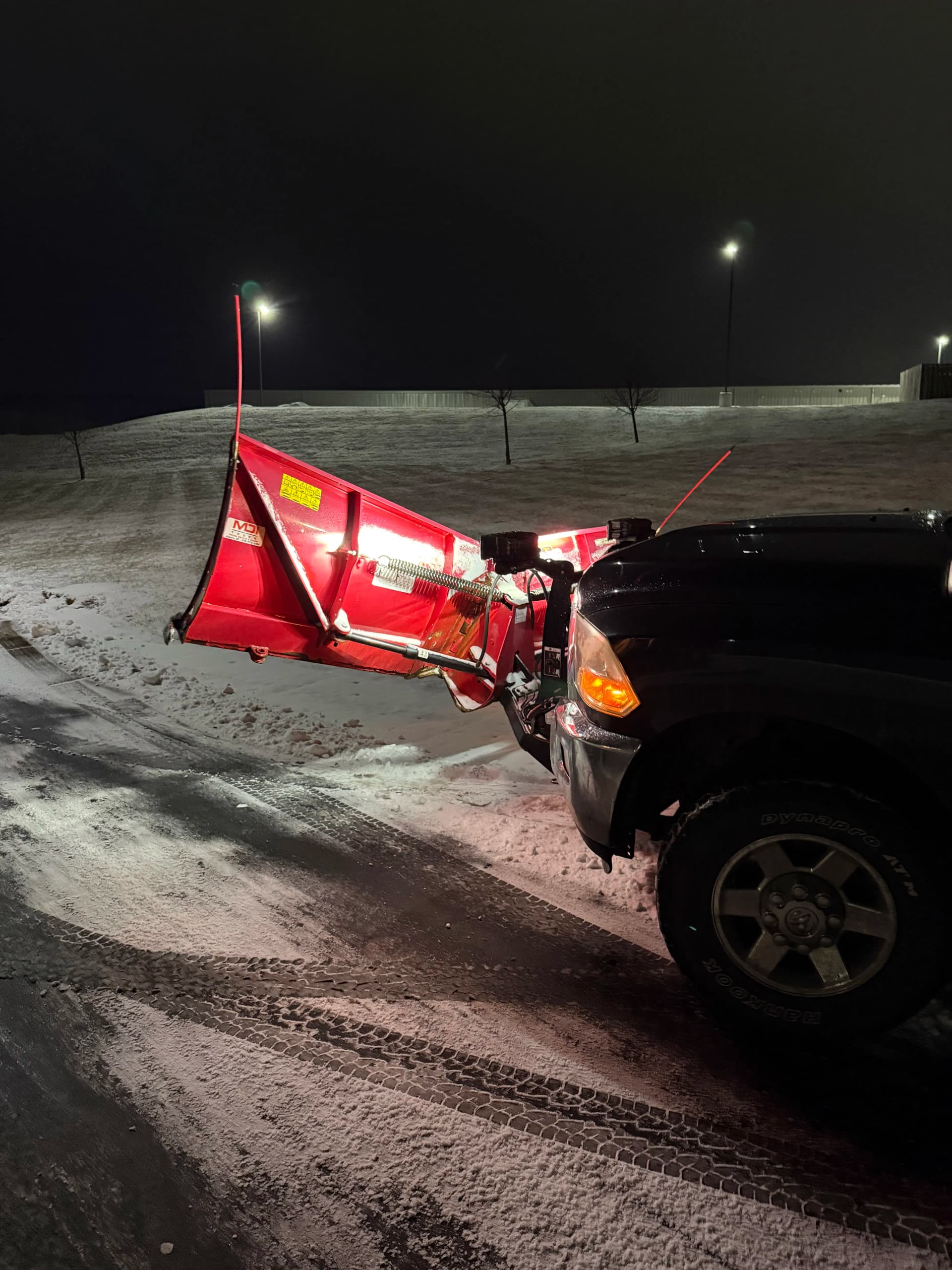
Depending on the size and layout of a property, contractors may use pickup trucks with plows, skid steers, loaders, sidewalk machines, snow blowers, spreaders, and other specialized equipment.
Larger equipment can efficiently move substantial amounts of snow, while smaller machines are useful for sidewalks, tight spaces, islands, and areas larger trucks cannot access.
Having the appropriate equipment available can make a major difference during a significant winter storm.
Snow Removal vs. Snow Plowing
Snow plowing and snow removal aren't necessarily the same service.
Snow plowing generally moves snow to designated areas on the property.
Snow removal may involve loading accumulated snow into trucks and hauling it off-site.
For large commercial properties, snow piles can eventually consume valuable parking spaces or create visibility and drainage problems. When on-site storage becomes limited, hauling snow away may be necessary to restore usable space.
This is particularly important during winters with repeated storms and little melting between events.
Why Businesses Should Arrange Snow Service Before Winter
Waiting until snow is already in the forecast isn't the best time to start searching for a commercial snow contractor.
Professional snow companies have limited equipment, crews, and service capacity. Establishing service before winter gives both the contractor and property manager time to inspect the site, establish expectations, identify priority areas, and determine how the property will be serviced.
A preseason plan can also clarify important questions such as service triggers, deicing procedures, priority areas, snow storage locations, and communication during storms.
Who Needs Commercial Snow Removal?
Professional snow and ice management can be valuable for many types of properties, including:
Office buildings
Retail centers
Shopping plazas
Apartment complexes
HOAs and communities
Warehouses
Manufacturing facilities
Medical and professional offices
Industrial properties
Schools and institutional properties
Restaurants
Banks
Churches and places of worship
Each property has different traffic patterns and priorities, which is why commercial snow management should be tailored to the site.
Choosing a Commercial Snow Removal Company
Price matters, but it shouldn't be the only consideration when selecting a snow contractor.
Ask prospective contractors about their equipment, staffing, service area, communication procedures, insurance, ice-management capabilities, and experience with properties similar to yours.
You should also understand exactly what the contract includes.
Does the service cover sidewalks? Is salting included or billed separately? When does plowing begin? How are prolonged storms handled? What happens when snow needs to be hauled away?
Clear expectations before winter can prevent confusion during a storm.
Commercial Snow Removal in Central Pennsylvania
Central PA businesses can't control when winter weather arrives, but they can prepare for it.
A professional commercial snow and ice management plan helps keep parking lots, sidewalks, entrances, loading areas, and other critical parts of a property accessible throughout the winter season.
From preseason planning and pretreatment to plowing, sidewalk clearing, deicing, and snow hauling, commercial snow removal requires preparation, equipment, manpower, and careful attention throughout each weather event.
The best time to think about snow removal isn't when several inches are already covering your parking lot.
It's before winter begins.
Prepare Your Property for Winter
If you own or manage a commercial property in Central Pennsylvania, now is the time to establish your snow and ice management plan.
Whether you manage an office building, retail center, apartment complex, industrial facility, HOA, or another commercial property, reliable winter maintenance can help keep your operation moving when the snow starts falling.
Looking for commercial snow removal in Central PA? Contact a local commercial snow and ice management professional to schedule a site evaluation and discuss a winter service plan for your property.