A Homeowner’s Guide to 4-Step Lawn Treatment Programs
Curious how 4-step lawn programs really work? We break down pre-emergent, weed control, fertilizer, and winterizer in a simple, homeowner-friendly guide.
How a Simple Phone Call Turned Into a 4-Step Lawn Plan
We recently got a call from a homeowner — let's call her Susan — who said something we hear more and more these days:
“It's hard to find a landscaper that does grass anymore. We have someone who mows, but they don't put down weed killers or fertilizer. Do you have a program for that?”
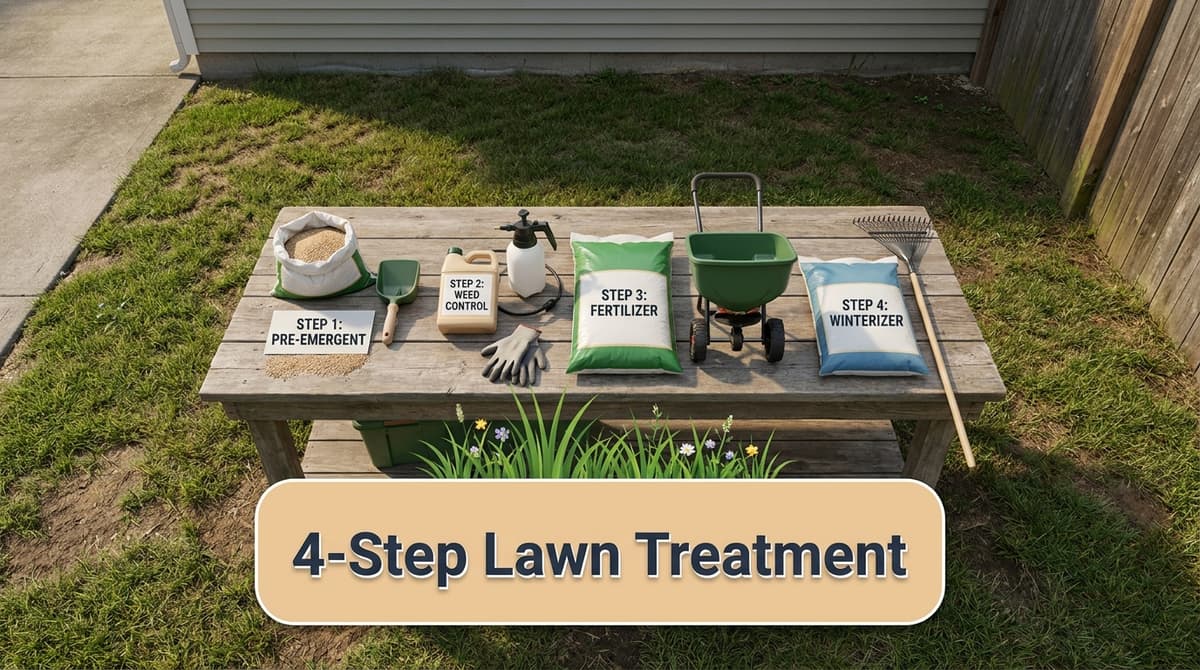
Susan already had a mowing crew she loved. They took great care of her “chopped up” yard by mowing it by hand, and she didn’t want to replace them. What she really wanted was a simple, sensible lawn treatment program: a little pre-emergent in the spring, some weed control, fertilizer through the growing season, and a winterizer at the end of the year.
As we walked her through our four-step treatment schedule, it struck us that a lot of homeowners have the same questions: What do these products actually do? When should they go down? And how do we keep things as “green” and eco-conscious as possible?
This guide is the same explanation we gave Susan, just expanded and put in writing for you.
Step 1: Spring Pre-Emergent & Early Weed Control
Our first visit of the year focuses on stopping weeds before they get started and feeding the lawn as it wakes up.
How pre-emergent works
A pre-emergent is a product that targets weed seeds right as they begin to germinate. It doesn’t kill existing weeds; instead, it creates a barrier in the top layer of soil so many weed seedlings never become visible plants. We pair this with fertilizer so your grass has the nutrients it needs to thicken up and outcompete weeds naturally.
What we’re targeting in spring
On our spring visit, we’re usually looking at broadleaf weeds like dandelions and early-season grassy weeds. If you already have visible weeds, we’ll spot-treat them with a post-emergent product while the pre-emergent handles future weeds.
Homeowner tips for Step 1
- Timing matters: We aim for early spring, before soil temperatures really warm up — often around the same time the forsythia bloom in many neighborhoods.
- Watering: Light irrigation after a pre-emergent can help move it into the soil, but avoid heavy watering or saturating the yard for a day or two so we don’t dilute that barrier.
- Mowing coordination: If you have a separate mowing crew like Susan, it helps to avoid mowing the same day right after a granular treatment so more product can settle and stick where it belongs.
Step 2: Early Summer Weed Control & Fertilizer
By early summer, some lawns start to show crabgrass or other warm-season weeds, especially in drier years. When we talked with Susan, she mentioned she didn’t see much crabgrass yet — and that made sense, because it had been a wet season and crabgrass usually shows up in hot, dry stretches.
What changes in early summer
As temperatures rise, different weeds take over. This is when crabgrass and other summer annuals really like to move in along driveways, sidewalks, and thin spots. Our second treatment focuses on these troublemakers while continuing to feed the turf.
Homeowner tips for Step 2
- Watch the edges: Pay special attention to curbs, walkways, and bare patches — they’re prime crabgrass zones and good early warning spots.
- Deep, infrequent watering: Watering deeply but less often encourages deeper grass roots, making your lawn more tolerant of summer stress and less inviting to weeds.
- Don’t cut too short: Keeping the mower at a higher setting helps shade the soil and makes it harder for weed seeds to establish.
Step 3: Late Summer / Early Fall Weed Clean-Up
By the end of summer, we’re in “clean-up and stabilize” mode. In Susan’s case, she mentioned a viney weed that was thriving and needed to be knocked back. That’s exactly the kind of issue we address during this visit.
Post-emergent and problem spots
Our third application focuses on post-emergent weed control — that means we’re targeting whatever has snuck through earlier treatments, including crabgrass that flared up during a hot spell. We also adjust our approach based on what we see in your yard: new strips of grass, thin areas, or spots that need a gentler touch.
Balancing weed control and “green” preferences
Like Susan, many homeowners tell us they’re not fans of insecticides and want to keep things as environmentally friendly as possible. We completely understand. While grubs and other insects can be a major fall problem in some lawns, we don’t push insecticides if you’re not comfortable with them. Instead, we focus on promoting a dense, healthy lawn, spot-treating weeds, and only recommending additional products when there’s a clear need.
Homeowner tips for Step 3
- Flag new grass areas: If you’ve recently seeded or laid new sod, let us know so we can tailor products and avoid stressing young turf.
- Monitor for patterns: Take note of where weeds keep returning (sunny slopes, shaded corners, wet spots); those clues help us fine-tune the program.
- Adjust watering with the weather: Late summer can swing between dry and soggy. Overwatering weakens roots and invites disease, so aim to keep the soil just moist, not saturated.
Step 4: Fall/Winterizer Fertilizer
The final visit of the year is all about preparing your lawn for winter and setting it up for a strong spring. We explained to Susan that this treatment “gives the grass food for the winter and gets it ready for next spring,” and that really is the goal.
Why winterizer matters
A good winterizer fertilizer is higher in nutrients that support root growth and energy storage rather than pushing a flush of top growth. Grass uses this nourishment to thicken roots and build reserves, so when soil temperatures warm up, it can green up faster and stronger with fewer weeds.
Homeowner tips for Step 4
- Ideal timing: We like to apply winterizer in late fall, when growth is slowing but the ground isn’t frozen.
- Leaf management: Try not to let thick mats of leaves sit on the lawn; they block light and air and can undo a lot of the good we’ve just done.
- Final watering check: As temperatures drop, scale watering back, but don’t let the lawn go into winter bone-dry if the fall has been unusually warm and rainless.
How to Tell When It’s Time to Adjust Your Program
Even with a solid four-step plan, lawns can change from year to year. We always tell homeowners to treat the program as a framework, not a rigid script. If you start seeing new weed types, thin spots after a heatwave, or recurring problems in one area, that’s a sign we may need to tweak timing, products, or cultural practices like mowing and watering. When we visit, we walk the yard, listen to what you’re seeing between visits, and adjust the plan so it fits your actual lawn, not just a calendar.
Need Treatments but Want to Keep Your Mower?
Like Susan, you might already have a mowing service you love — and that’s perfectly fine with us. Our four-step lawn treatment program is designed to layer on top of your existing maintenance so you get the best of both worlds: careful mowing and professional weed control and fertilization.
If you’d like us to take a look at your yard and recommend a simple, seasonal plan, we’re happy to walk through it with you the same way we did with Susan — in plain language, with options that fit your lawn and your comfort level.